One of the things that will likely change after we begin travelling again is our need for space....
March 24, 2021
Many of us have begun digging through old trip photos and thinking of adventures we enjoyed in the past. We reminisce with friends over the times we explored together and saw new horizons. But mostly, we are excited to start planning new trips.
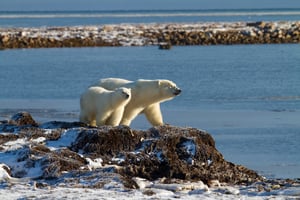
As the weather begins to get nicer and things begin to become more open, we’re reminded of a trip from our past. The highlights included polar bears and summer weather, but what stood out the most was the chance to talk with the Inuit guides and hear them talk about the north.
The wildlife was remarkable, seeing polar bears in their natural environment, noticing bowhead whales and seeing their tail poke out of the water before they dive. But having the opportunity to hear from our guides gave me a better understanding of life in the North.
Seeing the Arctic built an important connection in me to the land and the people that call it home. By exploring some of the conversations I had with the Inuit guides on my trip, Polar Bears & Glaciers of Baffin Island, I hope to express the knowledge they hold and how the Arctic is changing in front of their eyes.
Meet The Guides
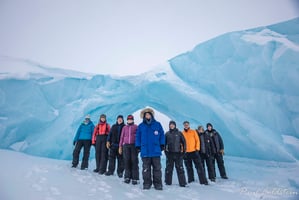
There were three Inuit guides on our trip and their responsibilities ranged from being the captains of the boats that took us around the Arctic islands, bear monitors when we came onto shore for lunch or an activity and finding wildlife locations.
Those were their primary duties but they each added so much to the trip, from telling jokes and stories to teaching us about the local environment. All three were from Qikiqtarjuaq, the community on Broughton Island where our trip began.
We landed in the community after a short but breathtaking flight from Iqaluit. We received a thorough briefing from the local Parks Canada station where an Inuit Ranger described to us concerns about the environment, what we need to be conscious of, how to react and prepare for certain dangers from wildlife and the terrain.
The goal is to familiarize yourself with this new and fragile setting and hearing it from someone who lived on the land their whole lives was informative and interesting. As a traveller visiting this beautiful place it’s important that you understand local concerns and how to have a minimal footprint.
As a group, we walked down to the pier where our guides were ready to meet us before hopping on the boats that would take us to our safari camp on an Arctic beach.
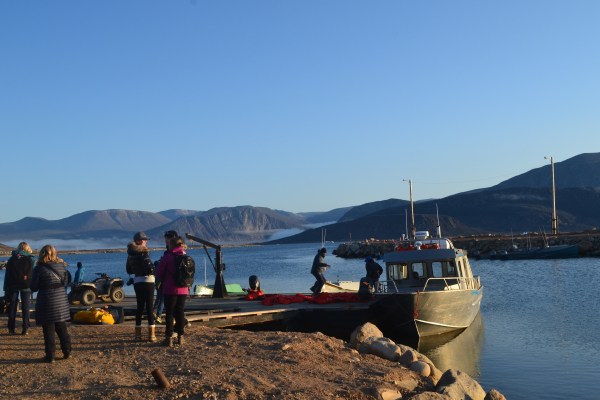
Billy, the captain of the first boat, runs a local outfitter that Arctic Kingdom partners within this area. We rely on his knowledge of the land for wildlife locations, his advice on the optimal place for our camps, his relationship with the community and the people, and other amenities like the boats we explore on.
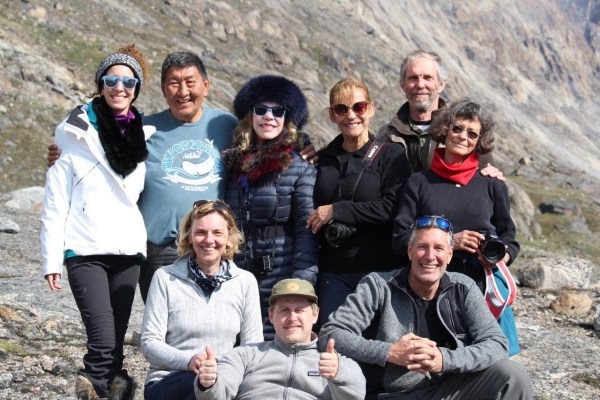
I was talking to him about how he began as an outfitter in the area and what kind of groups he enjoys. He told me that he began with father and brother. His father said early on that people want to visit this place and want to see the animals here, so it is best that people from the area are involved in the trips. His father and brother are outfitters a little further north and Billy works here with his son.
It’s clear that he likes what he’s doing. Seeing his pride at showing off the beauty of this landscape and I could see how excited he got when his eyes, searching the shoreline for movement or a white tuff of polar bear fur, spotted something!
His knowledge of the land and understanding of the wildlife’s behaviour was on display immediately when on our first day he spotted a mother and cub high up on a hill side about to go over a ridge. When we didn’t speed off right away around the ridge, someone asked why? He explained that if we waited a minute or two, that the bears would come down the hillside closer to the water since it’s easier ground for them to travel over, and by waiting a moment we wouldn’t scare them away.
He was right! After a few moments we slowly crept around the point and sure enough, the mother and cub had come down the hill and were walking close enough for us to get great photos.
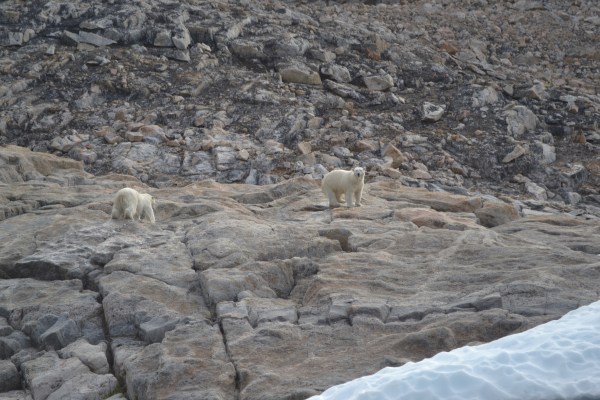
It was a real thrill watching Billy with his binoculars scouting the shoreline. He’d point to a white spot that everyone else was certain to be a rock, but sure enough, after a couple of moments the white spot would shift, and you’d notice a polar bear head pop up. He still gets so excited finding wildlife for guests new to this place. Whether it’s on snowmobiles in the spring or on the boat during summer, Billy uses all his experience to help Arctic Kingdom provide an unforgettable trip.
Besides partnering with Arctic Kingdom during the spring and summer, he transports travellers to the beginning of the hiking trail that goes through Auyuittuq National Park and facilitates commercial projects, such as film crews and photoshoots.
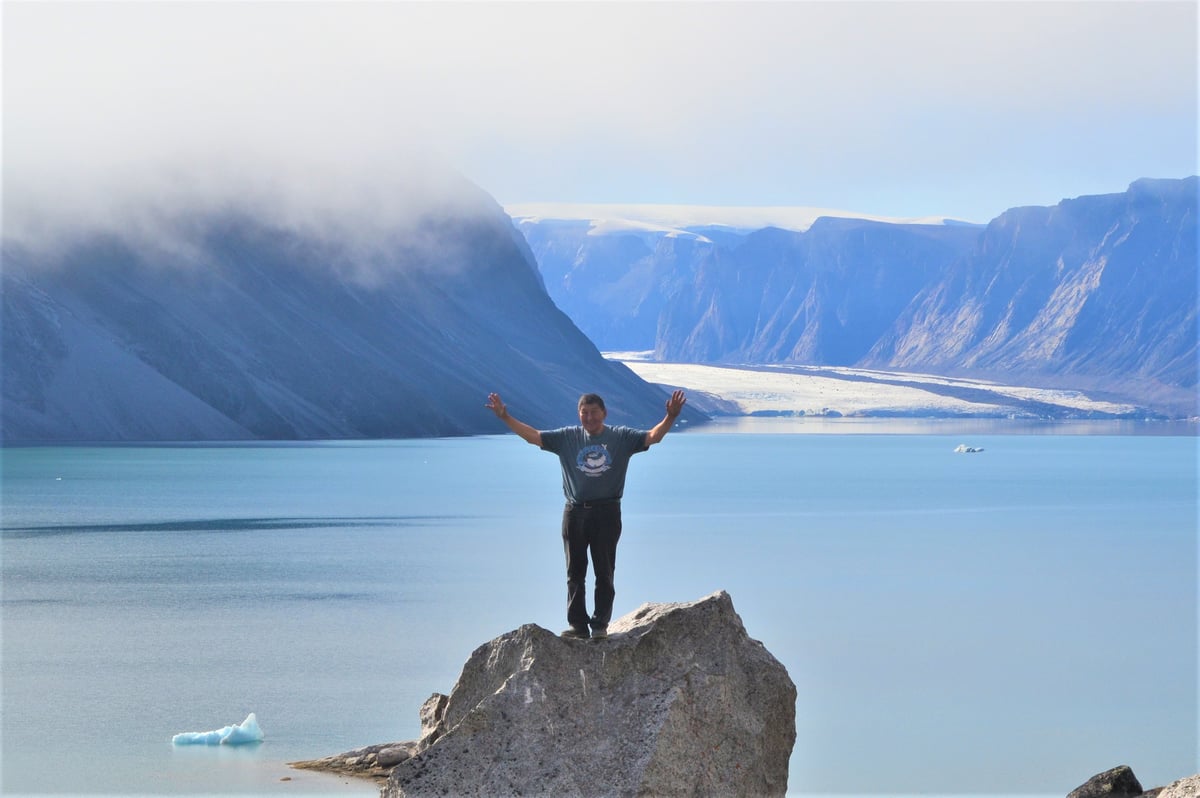
Billy, who is rarely found without his camera when he’s off the boat, says he really enjoys the fun of working with a photoshoot. He loves taking them to beautiful spots he’s discovered over the years that becomes the background of one of these productions. He even took my group to one of these locations, a rugged rock that makes a platform to stand on with a breathtaking glacier behind.
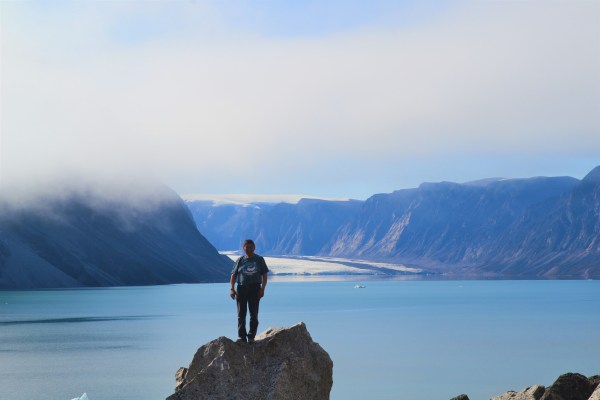
On our way to that spot, Billy points out the vegetation along the way and highlights some of the uses. He pointed out Nunavut’s territorial flower purple saxifrage, Labrador tea that makes a delicious tea, and Arctic willow.
He describes how he learned from his mother a special use for the catkin that grows on Arctic willow. The willow has these catkins, a slim, cylindrical flower cluster, that has a beautiful purple bloom that then begins to grow silvery fuzzy cotton-like hair. Billy explained to us how this mossy material is used as a wick for candles and fuel for fire in a landscape without trees. Beyond the medical vitamins it offers, it can be used for countless things such as even insulation.
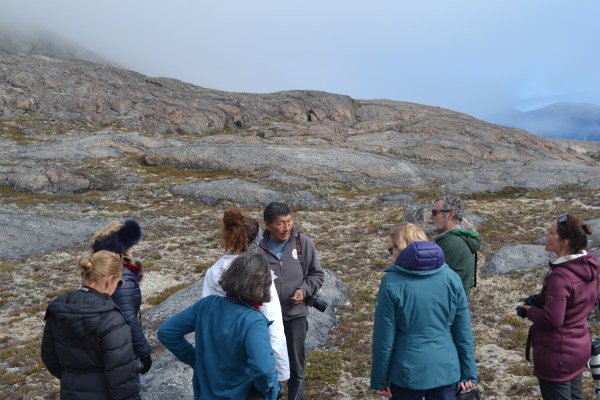
As we all posed for photos with this ancient glacier behind us, Billy’s son Raymond caught up to us with a coffee mug full of berries he had been picking and offered to us.
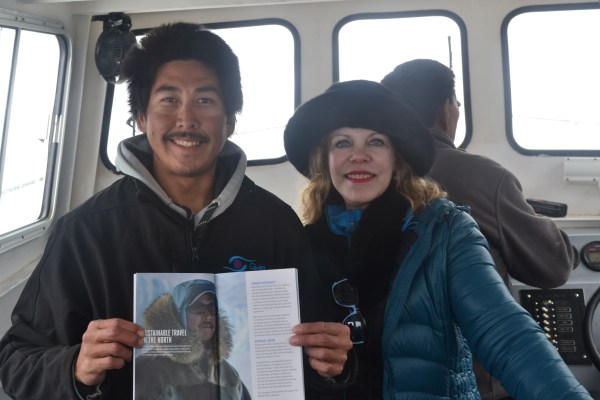
Raymond is a hilarious, engaging, and caring young man who works with his father to provide these remarkable experiences. And seeing him notice that a picture of him made it into the Arctic Kingdom brochure was too funny, beaming with joy he jokes about what a good model he makes.
He captains the second boat and has a lifetime of experience on the water. Growing up in Qikiqtarjuaq he tells me about how often he was on a boat. Whether it was fishing, working with his father’s on tours, or just the fact that boating is the main way to get around an island environment.
One of my favourite stories he told us was about his days working on a Newfoundland fishing boat. I asked what led him there and he reminded me, while he’s in the middle of confidently hopping around the boat refueling the motors, that he’s always been around boats and is so comfortable with the water having grown up on the Arctic Ocean.
I asked him what it was like on the Newfoundland fishing boat. He tells me that it could be quite tough! He had never been so far from home, and he got a bit lonely, even when being on a boat is so natural to him. He mentions that it still took him a week or two before he stopped getting sea-sick since the water was so much more turbulent than even he was used to, and that the gruff old fisherman could be hard on him for being new at a difficult and demanding job.
When I asked about his favourite part he told me a story that seemed out of the film, The Secret Life of Walter Mitty. While they were off the coast of Greenland the fishing boat had a broken part that needed to be replaced. Only a spot in Iceland could replace the part so the whole crew went to Iceland and had some time off until the boat was fixed.
Considering it’s such a travel destination now, I wondered what he did and most enjoyed. With so much excitement he started to tell me about the Blue Lagoon, a famous resort/thermal hot spring. How he spent all day long in this crazy place! After the cold and drafty fishing boat, he could think of nothing better than resting in a hot spring.
“I just found a great spot and held up there almost all day long. People would show up and leave and I hadn’t even moved. Just watching all these different people from all over. When they were finally closing and I had to get out I could barely stand anymore,” he says laughing at the memory.
Raymond and I talked often; he was just so pleasant. Being similar ages meant we had similar interests like music, sports and just joking around. But everyone really enjoyed Raymond, he was mature yet excited, considerate and engaging.
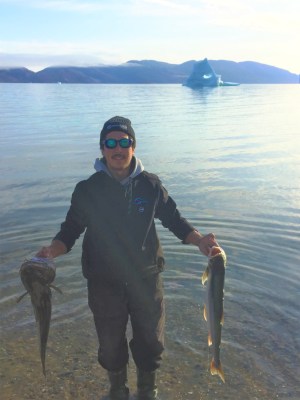
On my trip, Billy’s second boat was undergoing engine repairs, so we had another Inuit guide from the community that captained his boat for us. Ensuring that there would be enough space for everyone we were happy to have Jonah, his smile and his boat.
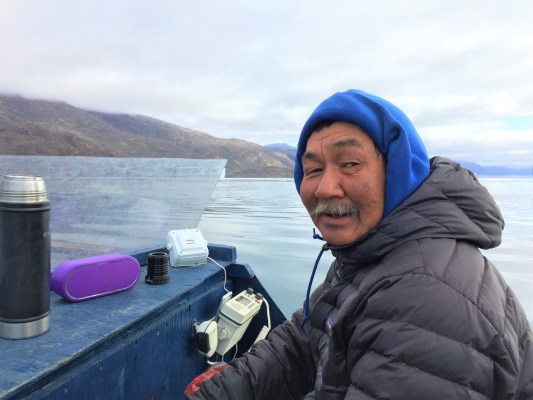
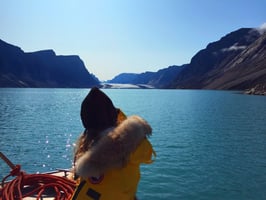
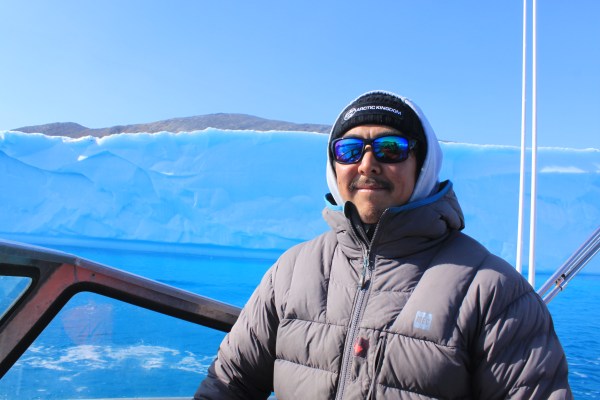
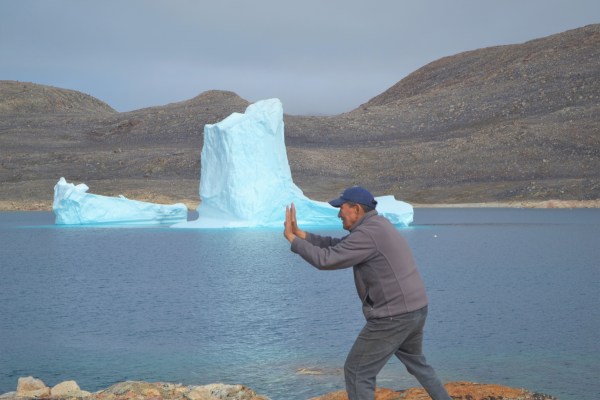
One of the things I noticed about Jonah was how cheerful he was, always smiling, hearing his laugh over the roar of the engine. The first conversation I had with him was when I was sitting next to him as we boated past enormous icebergs through a glacier-carved fiord.
“I can’t take how loud you are!” He said to me laughing. I realized I hadn’t said a word since we pushed off the shore, I was just too enthralled with the landscape.
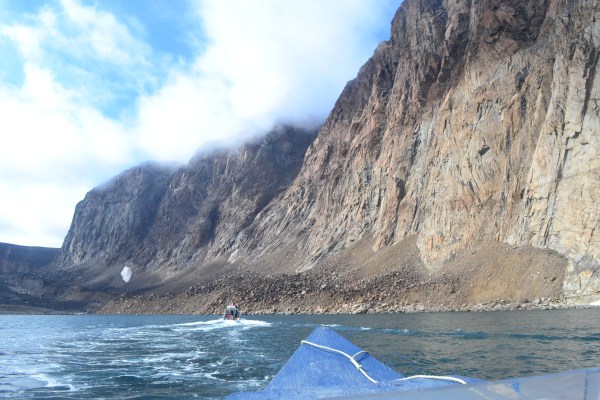
Laughing myself we began to talk. He asked me where I was from and about myself. He seemed genuinely curious and outgoing. People often can ask questions without being interested, but Jonah wanted to hear what you had to say and find out more about the world out there.
We shared a lot about ourselves, I described my experiences canoeing around Ontario and Quebec and the wildlife I’ve seen there. And I had so many questions about the changes he’s noticed living up here as climates are changing.
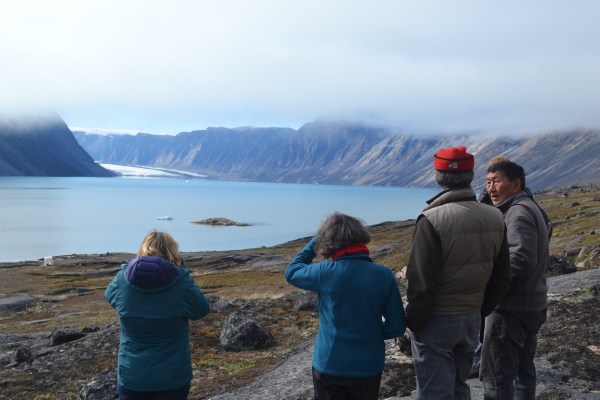
Many of the people up here, like Jonah and Billy, have a camp that’s away from the community and on the land. That means that they rely on the environment more intimately and notice climate shifts so directly. Not to mention that they often have to deal with and manage the animals that freely roam the terrain.
He told me his camp was up one of the nearby fiords and when I asked if he had polar bears come to his camp, he laughed and said he sure does! To me, that sounded terrifying, having learned all my life about the big scary polar bear. I asked him if it terrified him.
“Haaa! No way. You just scare it off if it comes.” I laughed too and told him that’s how I feel about finding a raccoon in the backyard. He says, “well sure, that’s what you do with animals around.”
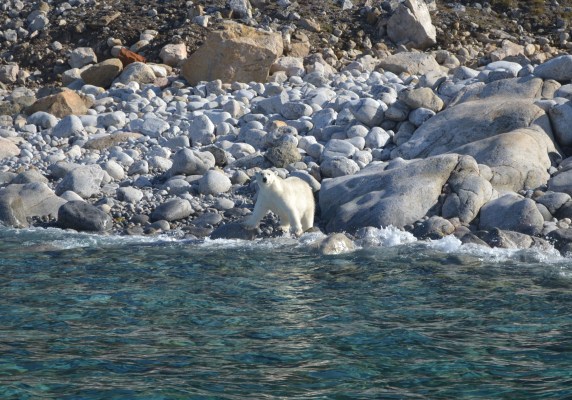
He went on to explain that this is an animal he’s been around his whole life. He knows how to interact with them and he appreciates how polar bears understand your behaviour pretty well too. If you confidently stand your ground and make loud but not frightening noises, the bear isn’t interested or curious about you anymore and walks off. It’s this understanding of the animal’s behaviour and how to interact safely with them that made me feel so comfortable having him and our guides around.
Next, we talked about the climate. “Have you noticed changes in the climate? Is it warmer than usual these days?” He doesn’t really know if it’s warmer or colder than years ago, but right now there is less snow on the mountain tops than he is used to. Even though it’s summertime, it is still the Arctic, and this is the land of glaciers, but they are visibly shrinking each year.
“How about icebergs, are you seeing more or less.” He says that it seems like there’s more. It used to be there’d be some small ones from the local glaciers, and the odd enormous icebergs that probably came from Greenland.
I asked if he thought this was due to global warming making the ice shelves more unstable and more likely to break off? He said he couldn’t say but we talked further about what a shifting climate could mean for his home, like changes in animal migrations.
He talked with an incredible bluntness and was straightforward about noticeable facts. Jonah wasn’t wrapped up in the international debates about the topic’s validity or influenced by a demand to be balanced in your viewpoint. He talked about what he saw, and we discussed what natural events could be directly affected in this environment.
It was a really interesting conversation and I enjoyed all the other times I got to talk with him. But I think the memory of Jonah that will last the longest, was arriving back at camp and seeing him hanging out on his boat floating just offshore with his giant smile.
We asked someone onshore why he was sitting out on his boat. They explained that the dog that acts as a bear monitor and pet to one of the expedition leaders, was getting excited around Jonah and wouldn’t stop barking. So rather than leasing the dog and putting it into one of the tents, Jonah volunteered to hop onto his boat and let the dog remain free.
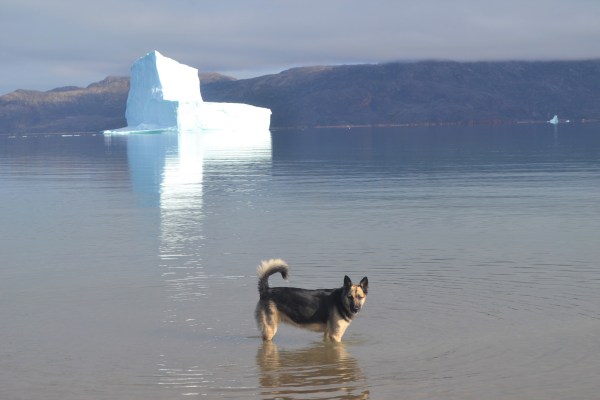
The kindness and thoughtfulness is so natural in all of the Inuit guides I met on this trip. The principle of community is so evident in how they treat everyone and seemed to make the group so welcome and comfortable in this beautiful place.
There’s no doubt that seeing Arctic animals and the breathtaking landscapes that the fills this place is a great reason to experience the North but getting to know the people and talking with our guides was a highlight I’ll cherish and never forget. Nunavut means “our land” in Inuktitut, but it’s the people that make it so remarkable.
Though we know recent times have impacted us all, we are in this together. We all look forward to the chance to meet new people, hear new perspectives and safely see new sights.
The north is a beautiful place with incredible people, and we can’t wait to provide once-in-a-lifetime trips like: Polar Bears & Glaciers of Baffin Island Safari
By: Mat Whitelaw